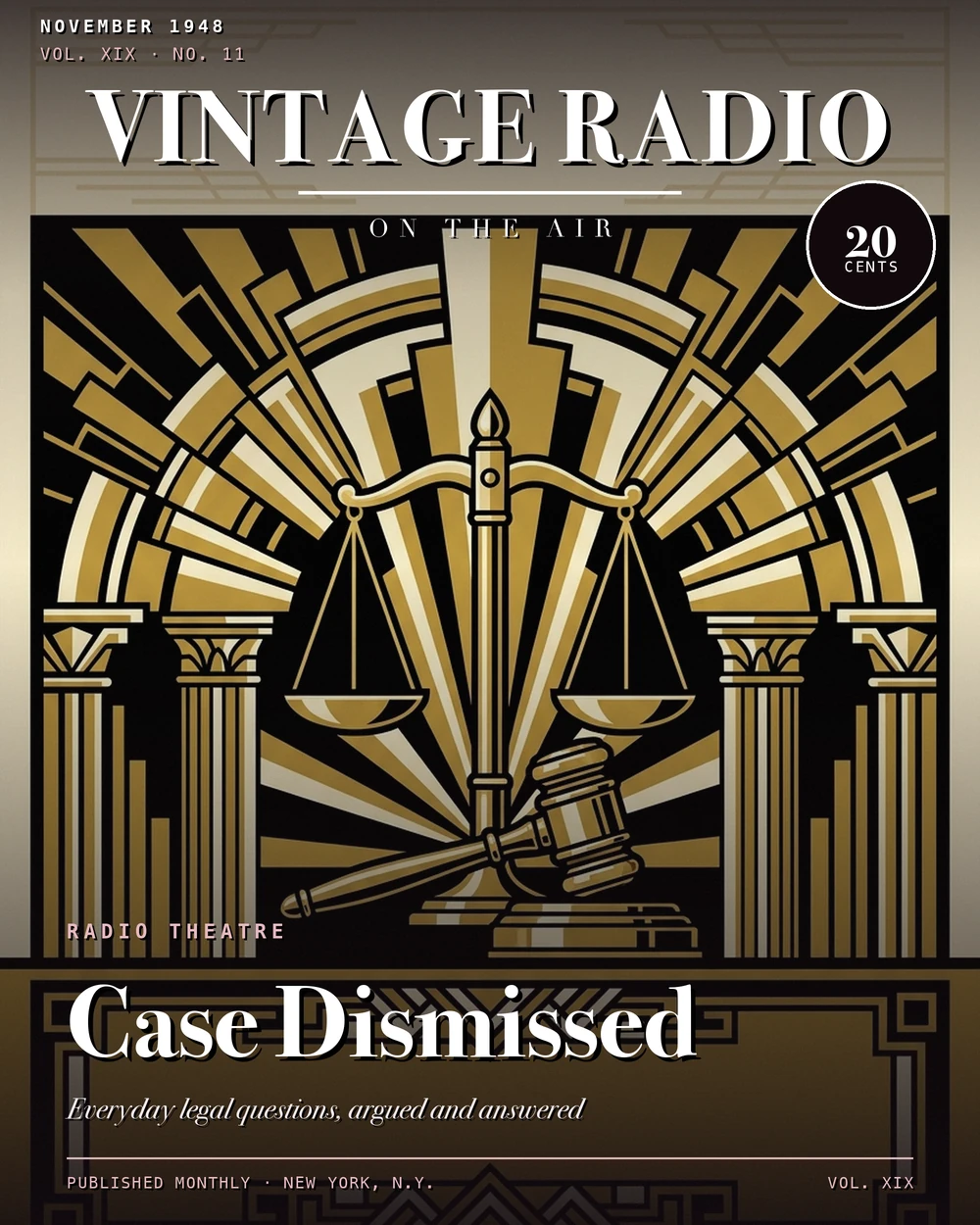
Case Dismissed
What It Was
Case Dismissed ran on NBC's Chicago flagship station WMAQ (670 AM) from January 30 to April 24, 1954 — thirteen weeks of Saturday afternoon radio that used drama to teach Illinois residents when and why they needed a lawyer. The show was sponsored by the Chicago Bar Association, which had been running public service initiatives in the city since its founding in 1874, and the arrangement shaped everything about how the program worked. This was not a courtroom thriller. It was closer to a soap opera with a civic mission: ordinary people facing legal decisions, often making them badly, and dealing with the consequences.
The show aired locally rather than across the full NBC network, and its cast and crew were drawn almost entirely from Chicago talent. That local focus was central to its purpose. Host John C. Fitzgerald, Dean of Loyola University Chicago School of Law, opened each episode with a reminder that the stories were based on Illinois law and might not apply in other states. Fitzgerald had been dean since 1937 and would hold the position until 1959; his institution's emphasis on morality and public service fit naturally with what the show was trying to do.
The Stories It Told
The episode titles read like a checklist of the legal situations ordinary people encounter and often handle without professional advice: "Pitfalls of Buying a Home," "Installment Buying," "Legal Wills," "Adoption," "Child Support," "Landlord and Tennant," "Rights When Arrested," "Liability for Minors," "Criminal Liability," "Libel and Slander," "Juvenile Delinquency," and "Responsibilities of Eye Witnesses." That's nearly the full run of thirteen known episodes laid out in plain language.
The dramatic engine was consistent across episodes. Characters who skipped the lawyer — or took legal guidance from friends, neighbors, or anyone without a license — typically found their situation getting worse before it got better. The series functioned as a sustained argument for consulting a professional, wrapped in enough story to hold a Saturday afternoon audience. Each episode ended with a direct message from the Chicago Bar Association, which also promoted its Legal Referral System for Illinois residents who needed help finding an attorney.
What Survives
The run produced thirteen episodes in its three months on the air. Twelve of those are preserved, with a combined running time of roughly five and a half hours. The collection was certified as complete on April 4, 2006. For a locally produced public service drama from early 1954, that survival rate is notable — most of the story is still there to hear.
Case Dismissed never aimed to be network entertainment. It was a practical tool dressed up as drama, built by a bar association, hosted by a law school dean, and aimed squarely at Chicago listeners who might one day need to sign a lease, contest a will, or understand what their rights were if they got arrested. It did that job for thirteen weeks and then signed off.